Bangkok – China’s military tested a long-range ballistic missile on Monday from one of its nuclear-powered submarines in the South Pacific, drawing protests and concerns from countries in the region.
The missile was launched at 12:01 p.m. and was carrying a live ammunition, according to an official from the Xinhua News Agency.
China last conducted a missile test in the Pacific two years ago, firing an intercontinental ballistic missile with a dummy warhead. That previous launch into global waters was the first in decades, since the 1980s.
Monday’s launch was part of an annual exercise, consistent with international law and practice, and was not directed at any country or target, according to a brief statement from Xinhua, which was also posted by the Ministry of Defense.
The 2024 launch mirrored the United States’ own ballistic missile tests, and experts viewed it at the time as an assertion of China’s superpower status.
Monday’s test came on the same day China and Russia launched annual naval exercises off China’s coast, French news agency AFP reported.
The “Joint Sea-2026” exercise began in China’s eastern port of Qingdao, the Ministry of Defense in Beijing said in a statement, according to AFP.
Australia, New Zealand and Japan condemned China’s missile launch on Monday.
The New Zealand government said it had been informed of the planned launch hours earlier and noted that the missile was fired from the South Pacific Nuclear Free Zone.
The nuclear-free zone was established by the 1986 Treaty of Rarotonga, which bans nuclear weapons throughout the region. China in 1987 ratified treaties promising not to test nuclear weapons within the region, or threaten to use them against signatories in the region.
“It appears that despite our long-standing concerns about this type of activity, China carried out this test within hours of notifying us,” Foreign Minister Winston Peters told the Associated Press in a statement.
The launch comes on the same day Australia and Fiji signed a new defense pact aimed at countering Chinese influence in the Pacific.
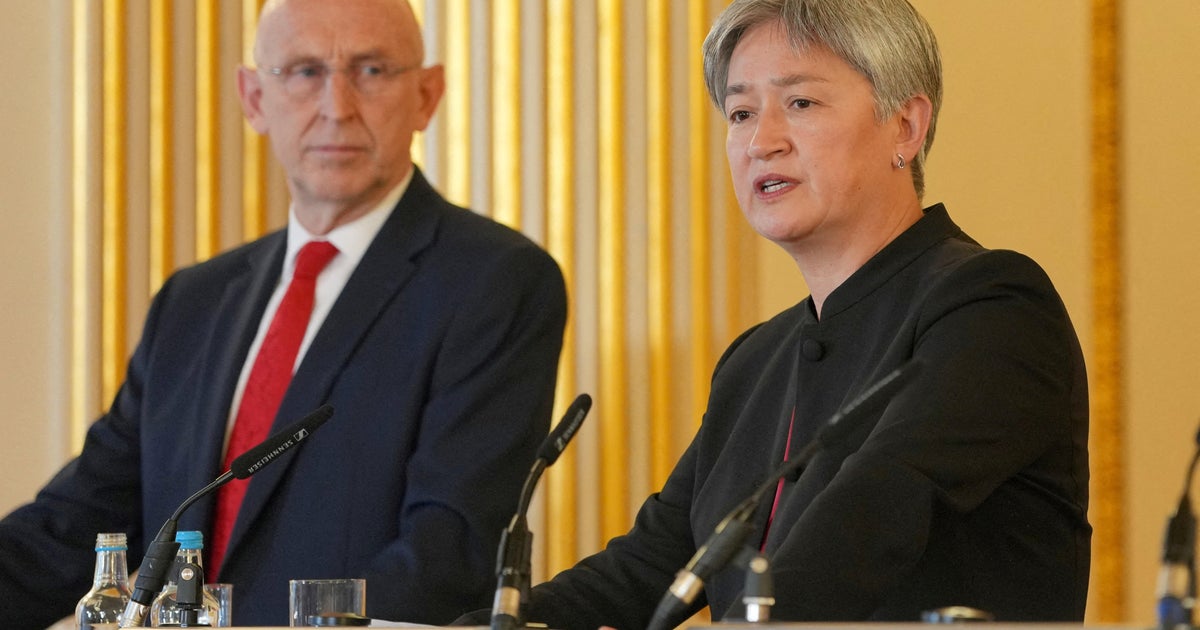
“Australia has been clear with China that we view this as destabilizing the region,” Australian Foreign Minister Penny Wong told reporters in Fiji, responding to the test.
Kin Cheung / Pool via REUTERS / File photo
Tokyo said on Monday it urged China to look into the test after the Japanese Embassy in Beijing was told about it by Chinese authorities ahead of the event, AFP said.
“We have strongly urged that the firing of ballistic missiles be reconsidered, so that they do not pose a threat to Japan’s security as they pass through Japanese airspace,” the government said in a joint statement.
Beijing dismissed the criticism on Monday.
“We hope that the countries concerned will avoid over-interpretation,” said a spokesperson for the Ministry of Foreign Affairs.
China maintains a “no first use” policy of nuclear weapons, but is also actively pursuing nuclear technology and weapons as part of its long-term strategy to modernize the People’s Liberation Army.
China has a fleet of six ballistic-missile submarines, and 59 nuclear-powered attack submarines, according to the Nuclear Threat Initiative, a Washington-based think tank.
In its latest report to Congress on China’s military capabilities, released in late 2025, the Pentagon said China has an estimated total of 600 nuclear warheads by 2024, adding that the PLA remains on track to field more than 1,000 nuclear warheads by 2030.