10-Year Sky Survey Begins Filming ‘Cosmic Movie,’ Cyborg Cockroaches Want to Dive and More Science News

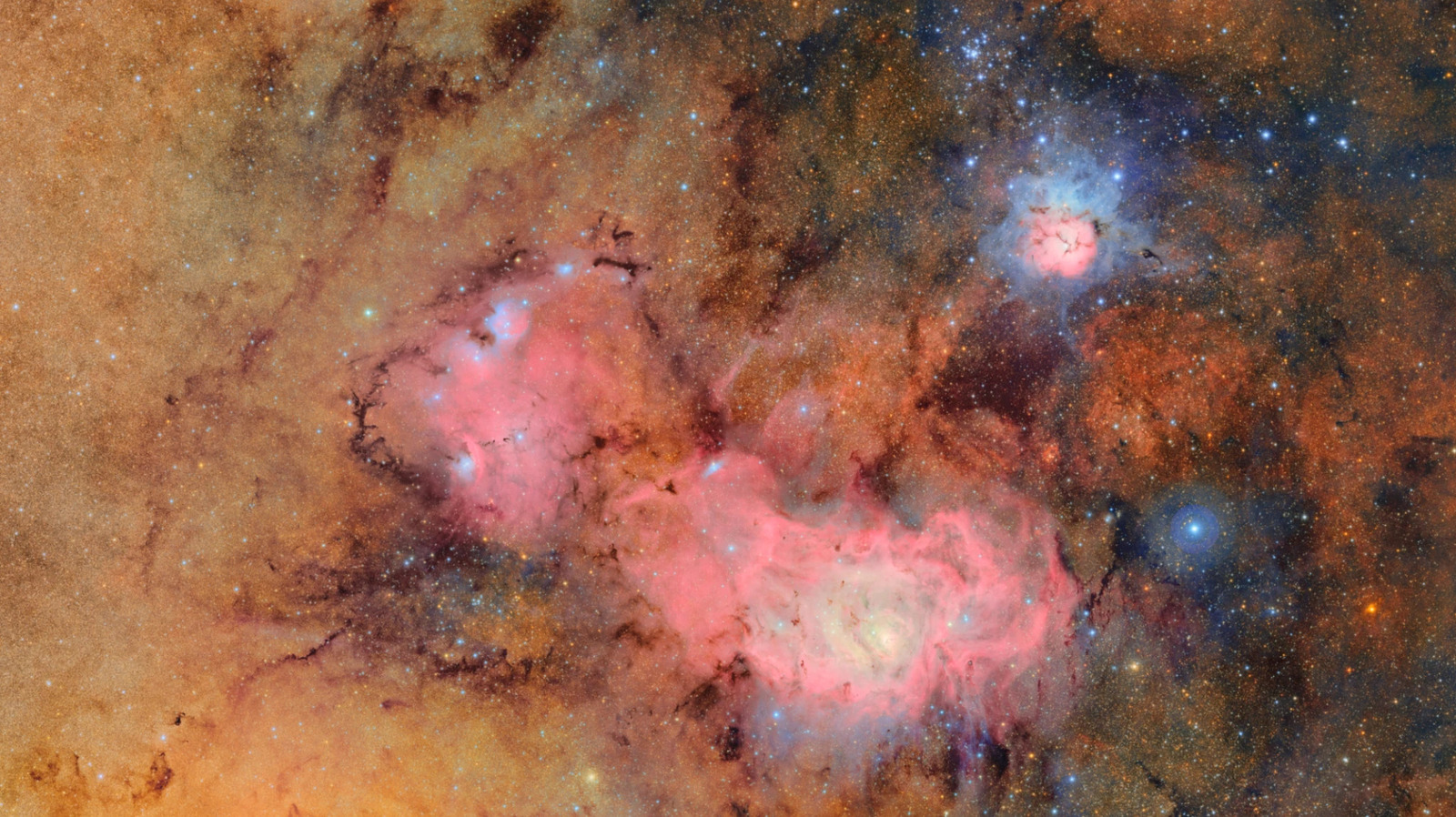
This week marked the start of the Vera C. Rubin Observatory’s Legacy Survey of Space and Time, the largest sky observation effort more than two decades in the making. It can help us better understand our solar system and the mysteries of the universe, from dark energy and dark matter to the expansion of the universe. Read on to learn more about that, and other science stories that caught our attention this week.
Vera C. Rubin Observatory goes live
Chile’s Vera C. Rubin Observatory, which contains the world’s largest digital camera at 3,200 megapixels, has begun its 10-year survey of the universe. Its mission began on June 30, and for the next decade it will capture a new image about every 40 seconds, scanning the entire southern sky every night. A press release announcing its debut said its observations “will create a world record, with the highest definition of time lapse.”
“Today, we begin filming the greatest cosmic film ever made,” Brian Stone of the National Science Foundation said in an announcement. The observatory captured its first images last summer in a test of its capabilities, producing stunning views of millions of galaxies and stars, as well as thousands of never-before-seen asteroids. During its ten-year survey, called the Legacy Survey of Space and Time (LSST), it will revisit each point in the sky about 800 times, allowing it to record changes and cosmic events. Rubin will take about 1,000 images each night, which is about ten terabytes of data every day.
“It begins a mission that will redefine modern cosmology and astronomy,” said Darío Gil, Under Secretary for Science at the US Department of Energy. Gil added, “In seeking to understand the mysterious phenomena of dark energy and dark matter, we are not just looking at the stars; we are striving to grasp the fundamental laws that govern our lives.”
Diving suits for cyborg cockroaches
This week in Research That Makes My Skin Crawl, scientists from Nanyang Technological University Singapore and Waseda University announced that they have developed a tiny diving suit that allows cyborg cockroaches to survive swimming underwater for hours at a time. If you’re wondering why, exactly, roaches need to be transformed and forced to swim underwater at all, I’m right there with you.
According to the team, cyborg insects have the potential to be used in search and rescue operations, as they can reach spaces inaccessible to humans, animals and giant robots. Cyborg roaches have recently been put into the field for the first time to help with search and rescue efforts after the devastating earthquake in Myanmar this spring.
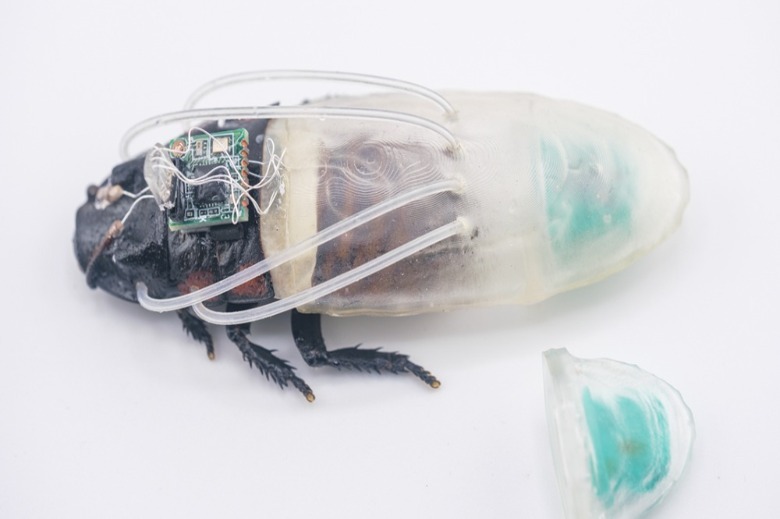 NTU Singapore/Waseda University
A flooded area can often prove impassable to cyborg roaches, inhabited by Madagascar hissing cockroaches equipped with electronic controls. The flexible diving suit consists of an oxygen tank, a flexible shell and four silicone supply tubes attached to the roach’s spiracles, or breathing holes. The team says these tubes can be removed painlessly afterwards without harming the roach. In a paper published this week on Natural Communicationresearchers report that cyborg robots can swim underwater for up to 3 hours with this setup in tests.
NASA chooses three companies to deliver the 2028 Moon Base
Earlier this year, NASA revamped its lunar exploration plans, announcing that it was delaying construction of the Lunar Gateway orbiting space station and would build a $20 billion Lunar Base. The first three missions to deliver payloads to the lunar surface to finally launch the Moon Base are scheduled to take place before the end of 2026. This week, NASA announced four more missions to the moon, with these scheduled for late 2028. The space agency says it has awarded contracts worth nearly $600 million to Ifly Aerotic for Astroitive science uploads Astroitivespay Moon Base.
Astrobotic will make two trips to the moon, while the other two companies will make one trip. All of these deliveries will depend on updated versions of each company’s designs, building on information from previous missions under NASA’s Commercial Lunar Payload Services (CLPS) program. The payload will be the same for each delivery: the Stereo Camera for Lunar Plume Surface Studies (SCALPSS) to collect landing data, the Laser Retroreflector Array (LRA) to gain precision in determining the position of the spacecraft in lunar orbit or on Earth, and the Linear Energy Transfer Spectrometer (LETS) to measure energy entering the atmosphere. If it seems unnecessary, well, that’s the point.
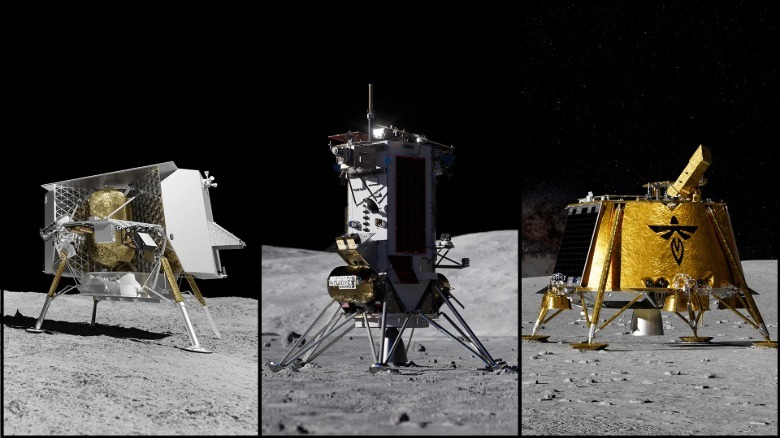 NASA/Astrobotic/Intuitive Machines/Firefly
“By flying similar scientific instruments to multiple occupants, we will better understand the potential hazards during landing and build a global network of environmental data and landmarks on the Moon,” said Joel Kearns, deputy director of exploration, Science Mission Directorate, at NASA Headquarters. “It’s like having weather stations at different locations on Earth. These three payloads have been proven by flight and their data is critical to supporting safe human exploration of the lunar surface.”